
Brief description of the organisation/initiative
The initiative produces local food with full regard for the environment and the quality of the ingredients (clean food with no preservatives, pesticides or other harmful chemicals). 95% of the ingredients are sourced locally (except sugar, lemons, spices, and others that do not grow in the area). The motto of the initiative is “We make food in the rhythm of nature”. What is special about their products is that they use wild edible flowers to make jam and syrup.
Challenge overview
Before the pandemic, the business did not encourage online shopping, because the entrepreneurs thought that a direct relationship with the client is very important. The company is located in a tourist area and encourages tourists and locals to visit the small local shop. After the pandemic, they started making more personal and courier deliveries. The pandemic started a movement in Romania, more and more people became interested in local food, so this was an opportunity for them and other small producers.
Establishment of the organisation/initiative/enterprise
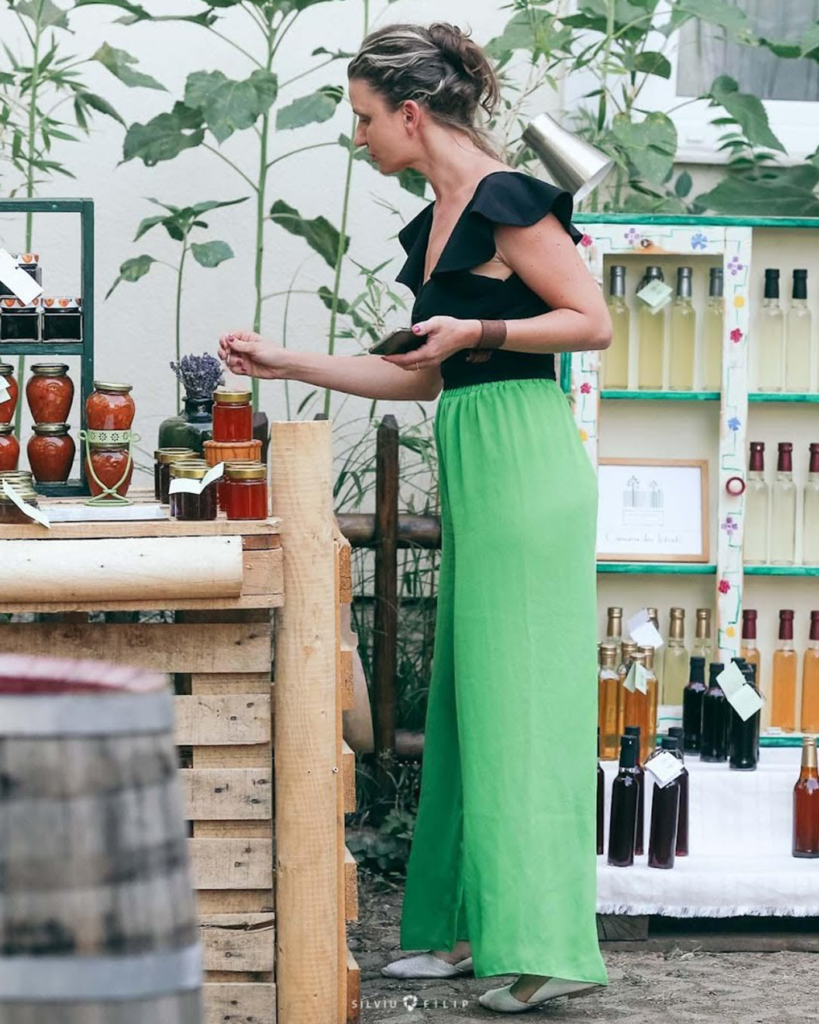
In the beginning, there was the question: “Can we live off what we can grow on our land and gather from nature (berries, wildflowers, etc.) with our resources without having to borrow money or apply for funds?”. The business began as an experiment that grew from their passion and knowledge. After 6 years, the initiative could be done with more dedicated team members (maybe 4). At the moment, the business has only two people. Therefore, sometimes, there is more work to get things done in time.
Management structure and governance
The pantry is a family business of only the people, mother and daughter. They use democratic management: decisions taken together, although the daughter, Paula Cristina Bora, is also doing the marketing and promotion, and she is the face of the business. The activity is for profit but in the future, they want to register their business as a social enterprise
Principles of work, objectives and activities
The main objective is to grow a local network of small ethical producers (clean food) and to build together a food hub. The owners are interested in a Participatory Guarantee System that promotes trust and cooperation. The primary activities are gardening using traditional methods, foraging, preparing food with no preservatives, using only traditional methods of preserving for the long term, and social media marketing. Another side-activity is education and awareness: they organise workshops, in which they talk about how to not waste food, especially in schools. The business is focused on the circular economy. It pays very much attention to developing new methods of learning how to reuse and not produce waste.
Target groups
For the no-food waste workshops, Paula works with high school teenagers. Regarding food products, she addresses two categories of people: a) the Age group 30-40 interested in pantry’s wildflower products, and b) the Age group 40-50 interested in traditional recipes like wild berries jam and syrup, vegetable spreads (zacusca), and pickles.
Innovation
What is different and innovative about this business is the will to develop a local business without an artificial money infusion (loans or other funds). Second, the way it addresses the customer service experience, even if it is harder to manage, they prefer a direct relationship with customers, not a cold interaction through online methods. Moreover, the educational dimension with young people through workshops, where they tackle the importance of reducing food waste and the impact it has on the environment. The business has a green approach to reaching customers: it does not go mainstream with big retailers. Instead, they encourage local and regional small farmers hubs such as dedicated Facebook groups, peer-to-peer, fairs and other local producers’ gatherings and even festivals. The way the pantry is presented as a business addresses a young generation already aware of sustainable and bio food products.
Key partners
The business is currently building a local network of other producers, encouraging entrepreneurial initiatives with people from the region who can use their land to grow fruits and vegetables since the area is underdeveloped and lacks in providing jobs. For the food waste workshops, Paula works with social enterprises from Timisoara (Intersect and CRIES).
Impact and Evaluation
Although Romania is not an isolated case, regarding small farming, people still use lots of chemicals for growing food. The most important influence of this business is that it encourages other local producers to see that they can thrive if they grow clean food and see the benefits of ecological farming. Customers are more aware of the problem. They started to understand the extra value of buying clean food for their families and the environment.
Although it is a small garden with only two people, the actual positive impact on the environment might be small but that is why organising workshops with teenagers and kids for wood waste reduction had a larger impact. Also, the already ongoing initiative to influence other small producers to use traditional food growing methods is already a sign of a positive impact.
In a nutshell, the success of this business is due to this integrated approach: consumption through awareness.
Recommendations
Paula would recommend patience as a useful attitude since a good practice initiative takes time. What she will recommend for someone who is in sustainable food farming is to address the young generation. They are vectors of change and influence since they are more aware of the environment. For short: address the people you know better, as a young person to young people.
Lessons Learned
Paula thinks that, even if at the beginning you look like a weirdo for doing things differently and almost no one believes in your idea, what is necessary despite how you are perceived, is to be enthusiastic, work with passion and never stop learning or getting inspired by other good practices.
The other aspect is to cooperate with other similar businesses. That is why Paula is a special guest at fairs and bio-food festivals, where she expands her network with others. Her small business model is an inspiration to others in the field.
References
Intersect social enterprise website.
CRIES social enterprise website.
Cămara din Totești Facebook profile.

Funded by the European Union. Views and opinions expressed are however those of the author(s) only and do not necessarily reflect those of the European Union or the European Commission. Neither the European Union nor the granting authority can be held responsible for them.